
Al Raha sits between Abu Dhabi’s coastline and the E10 highway corridor, giving villa owners a rare combination of beachfront proximity and established suburban infrastructure. The community’s sub-districts—Al Zeina, Al Bandar, Al Muneera, and the garden villas of Sidra and Khannour—each carry their own plot ratios, setback rules, and master developer guidelines. Designing an organic villa exterior here means working within those constraints while responding to the site’s specific microclimate: high humidity from the Gulf, intense solar exposure from the south and west, and salt-laden wind that degrades unprotected materials within a few years.
At Merka Engineering Consultants, our architectural design team has worked on residential projects across Abu Dhabi’s master-planned communities, including Al Raha Beach, Saadiyat Island, Yas Island, and Reem Island. The ideas below come from that project experience—what holds up technically, what clears authority review, and what actually performs in Abu Dhabi’s climate.
What Organic Architecture Means for a Villa in Abu Dhabi
Organic architecture aims for continuity between a building and its setting. Frank Lloyd Wright coined the term in the late 1920s to describe structures that grow from their site conditions rather than imposing a predetermined form onto the land. In the UAE context, that principle translates into specific technical decisions: orientation that accounts for prevailing wind direction, facade materials that age gracefully under UV exposure, and landscape integration that reduces irrigation demand while providing natural shading.
For Al Raha villas specifically, organic design addresses three conditions that shape every exterior decision. Abu Dhabi’s coastal humidity (averaging 60–80% in summer months) accelerates corrosion on exposed steel and stains light-coloured finishes unevenly. Afternoon sun temperatures on west-facing facades can exceed 65°C at the surface, creating thermal stress that cracks rigid cladding systems over time. And the Estidama Pearl Rating System—mandatory for all new construction in Abu Dhabi—requires minimum sustainability benchmarks that organic design strategies can satisfy more efficiently than conventional approaches.
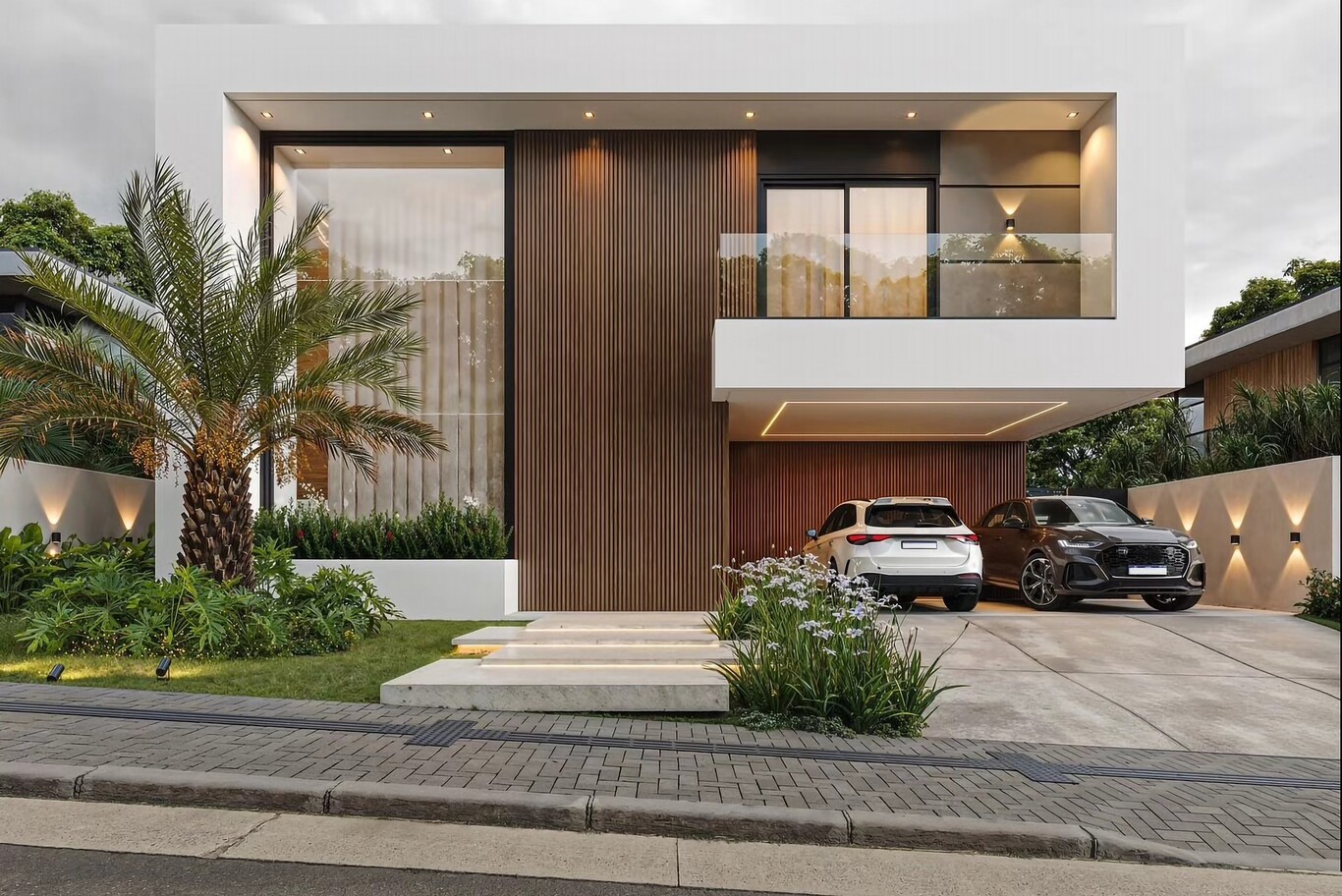
Facade Materials That Suit Organic Villa Exteriors in Al Raha
Natural Stone and Limestone Cladding
Limestone remains the most practical natural stone for organic villa facades in the Gulf. Its thermal mass absorbs heat during the day and releases it slowly at night, reducing cooling load on the MEP system. Locally quarried options from Ras Al Khaimah offer a warm, sandy tone that ties the building to the surrounding terrain without the maintenance burden of imported European stone. Typical thicknesses range from 30mm to 50mm for cladding panels, with stainless steel anchor systems rated for the coastal corrosion environment.
The key consideration for Al Raha is salt resistance. Porous stones like travertine look striking at handover but deteriorate within three to five years unless sealed and maintained regularly. Denser limestones with low water absorption (below 3% by weight) perform better over a 20-year lifecycle, which matters when Abu Dhabi’s building code requires long-term durability planning. Evaluating these tradeoffs is a core part of the material selection process and should be resolved during design development, before specifications are locked for tender.
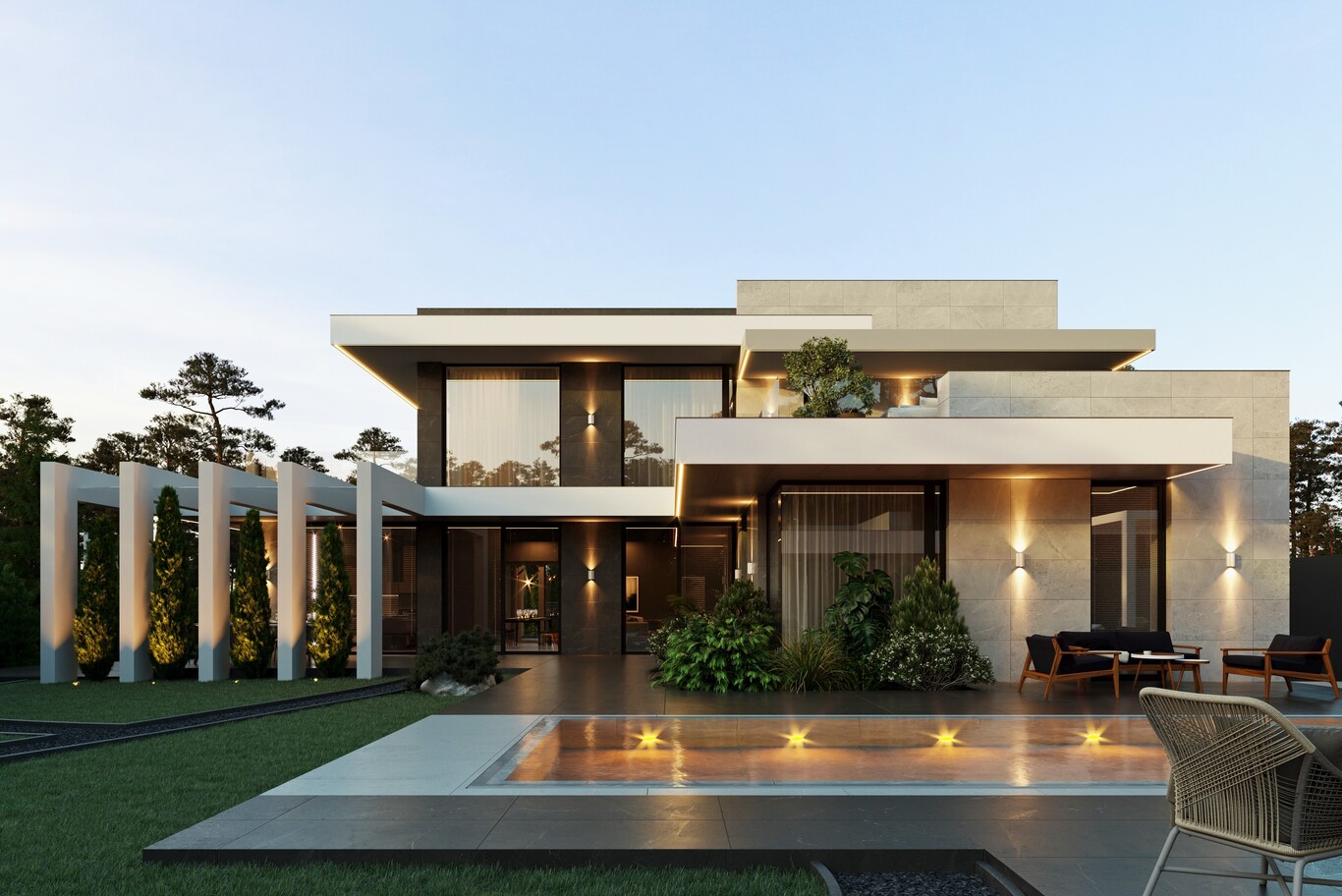
Timber Screens and Composite Alternatives
Timber mashrabiya and vertical louvre screens are a defining feature of organic villa exteriors in the UAE. They provide privacy, filter direct sunlight, and introduce a natural texture that ages with the building. However, real timber in Abu Dhabi’s climate requires careful species selection and finish specification. Accoya (acetylated radiata pine) and thermally modified ash are the two options that consistently survive the Gulf environment without warping, splitting, or greying within the first few years.
For projects where maintenance budgets are limited, aluminium composite louvres with timber-grain finishes offer a serviceable alternative. The visual gap between composite and real wood has narrowed considerably, and the durability advantage is significant. In either case, the screen system needs ventilation gaps behind the cladding to prevent moisture trapping—a common failure point that leads to mould growth on the structural wall behind. These elements also fall under facade regulations in Abu Dhabi, which govern fire rating requirements that vary between community types and building classifications.
Textured Render and Lime Plaster
Organic facades often rely on hand-applied plaster or textured render to create the softened, sculptural forms that distinguish them from rectilinear contemporary design. In Abu Dhabi, polymer-modified lime render performs better than standard cement render because it allows substrate movement without cracking—important given the thermal cycling that exterior walls go through daily. Earth-toned pigments integrated into the render mix eliminate the need for paint, which peels and fades in UAE conditions within two to three years.
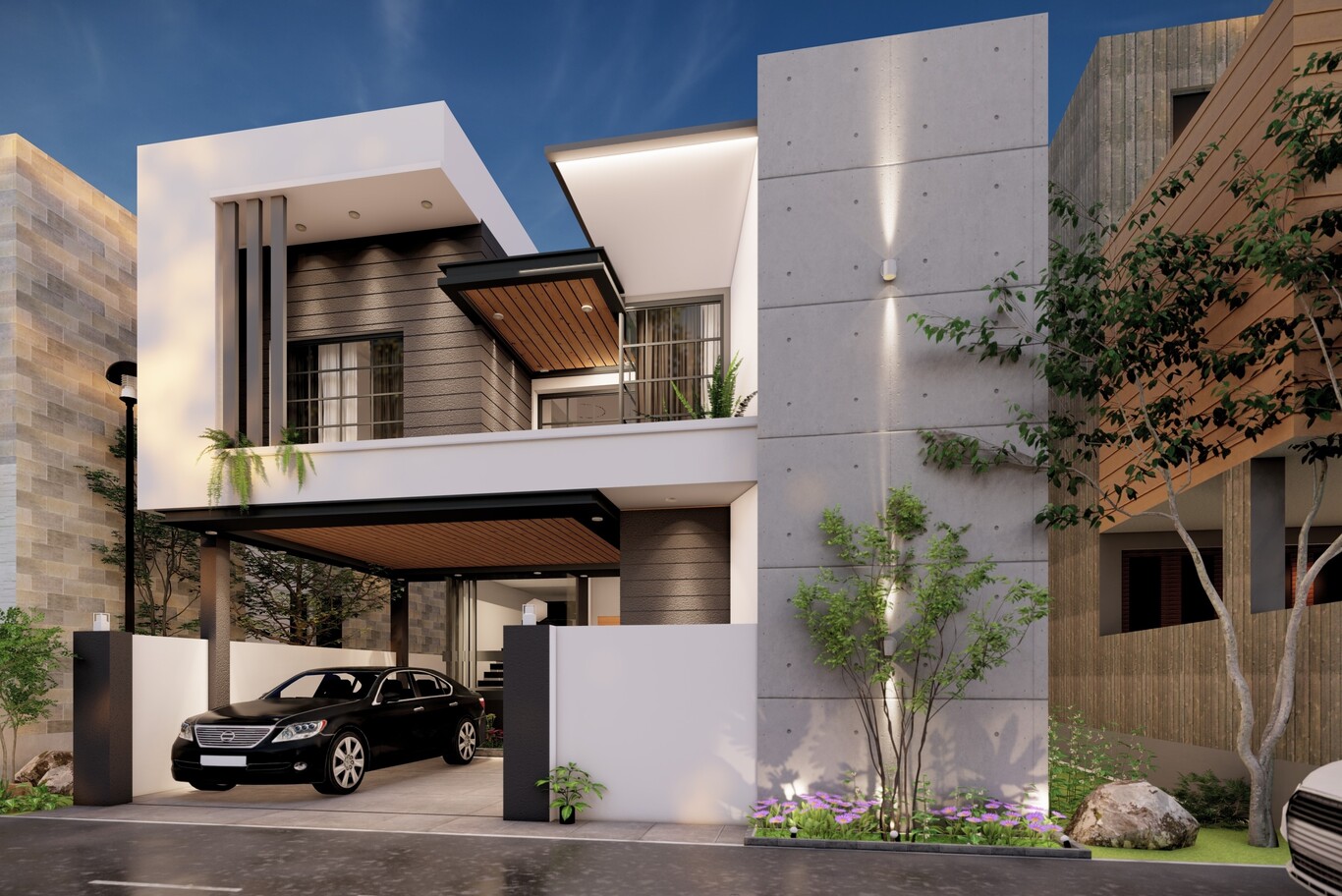
Biophilic Design Strategies for Al Raha Villa Exteriors
Biophilic design—the systematic integration of natural elements into built environments—overlaps significantly with organic architecture. For Al Raha villas, the most effective exterior strategies involve landscape, water, and the transition zones between indoor and outdoor space.
Courtyard integration. Traditional Emirati architecture used enclosed courtyards to create shaded, ventilated outdoor rooms. In Al Raha’s villa plots (typically 330–540 sqm), a central or side courtyard with mature planting can reduce ambient temperature by 5–8°C compared to exposed hardscape. The courtyard also drives natural cross-ventilation when paired with strategically placed openings, which supports Estidama’s indoor environmental quality credits. These are among the most effective passive design strategies for reducing operational energy costs in Gulf residential projects.
Living walls and vertical planting. Green facades work in Abu Dhabi when the irrigation system is designed as part of the MEP scope rather than treated as a landscaping afterthought. Drip-fed modular panel systems with hardy species—Bougainvillea, Jasmine, Tecoma stans—provide shade and evaporative cooling on south and west facades. The structural wall behind needs waterproof membrane protection, and the planting modules need maintenance access, both of which should be resolved during conceptual design rather than during fit-out.
Integrated water features. Shallow reflecting pools and channel water features along entry sequences create evaporative cooling and a psychological sense of calm. For Al Raha’s coastal environment, recirculating systems with salt-tolerant filtration are essential. The water feature also provides an opportunity to integrate greywater recycling, which contributes to Estidama’s Precious Water credits.
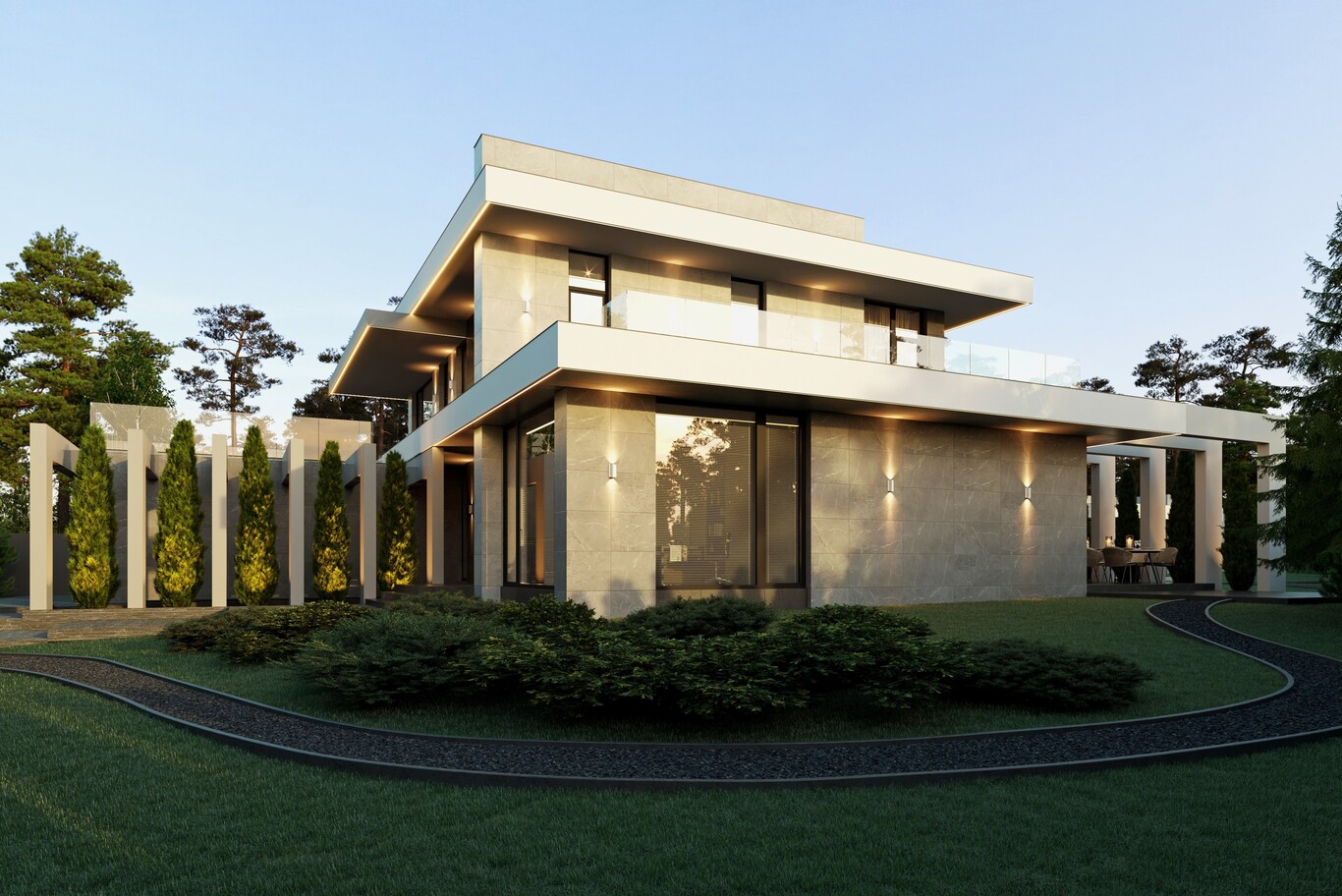
Abu Dhabi Regulatory Considerations
Every villa project in Al Raha requires Abu Dhabi Department of Municipalities and Transport (ADM) approval. The design must comply with the Abu Dhabi International Building Code (ADIBC), and all new residential construction must achieve a minimum 1 Pearl Estidama rating. Government-funded residential projects require 2 Pearl. For organic villa exteriors, the most relevant Estidama credits fall under Liveable Buildings (LB) for natural ventilation and daylighting, Precious Water (PW) for landscape irrigation efficiency and greywater reuse, and Resourceful Energy (RE) for envelope thermal performance—where facade material selection, insulation continuity, and glazing ratios have the most impact. Understanding these intersections is central to sustainable passive design in the Abu Dhabi context.
Master developer guidelines in Al Raha add another layer. Aldar Properties, which developed both Al Raha Beach and Al Raha Gardens, maintains design guidelines that govern facade colour palettes, boundary wall heights, material finishes, and landscape setbacks. These requirements are reviewed by the developer’s design review committee before the project reaches ADM for building permit submission. Our authority approvals team manages both the developer review and the ADM submission cycle, coordinating revisions until the building permit is issued.
Landscape Integration as Exterior Architecture
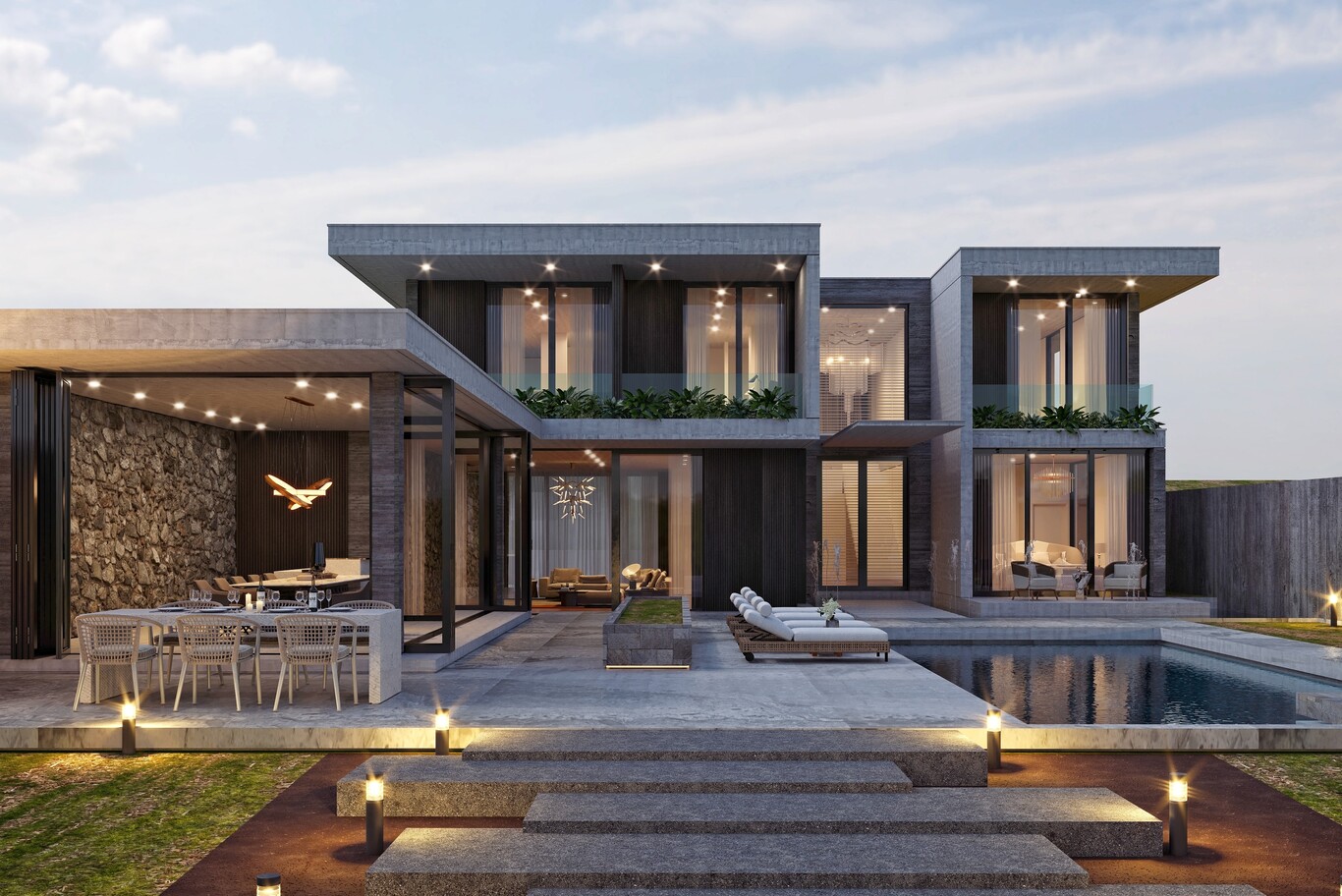
In organic villa design, the boundary between architecture and landscape dissolves. Retaining walls become seating. Planters become privacy screens. Hardscape pathways use the same stone as the building’s plinth, creating visual continuity from the street edge to the front door.
For Al Raha, plant selection should prioritise species adapted to saline soil and low irrigation. Ghaf (Prosopis cineraria), the UAE’s national tree, provides canopy shade and thrives in the coastal environment. Sidr (Ziziphus spicata) and Date Palms (Phoenix dactylifera) contribute vertical structure without requiring supplemental irrigation once established. Groundcover species like Sesuvium portulacastrum tolerate salt spray and stabilise sandy soil around the villa perimeter. These choices directly support the kind of site-responsive thinking that defines residential villa projects across the UAE.
The landscape plan should be coordinated with the architectural design from the earliest project phase. Retrofitting landscape integration into a completed design almost always results in compromises—planting zones that conflict with service routes, drainage that undermines retaining walls, or irrigation lines that cross structural foundations.
Where to Start
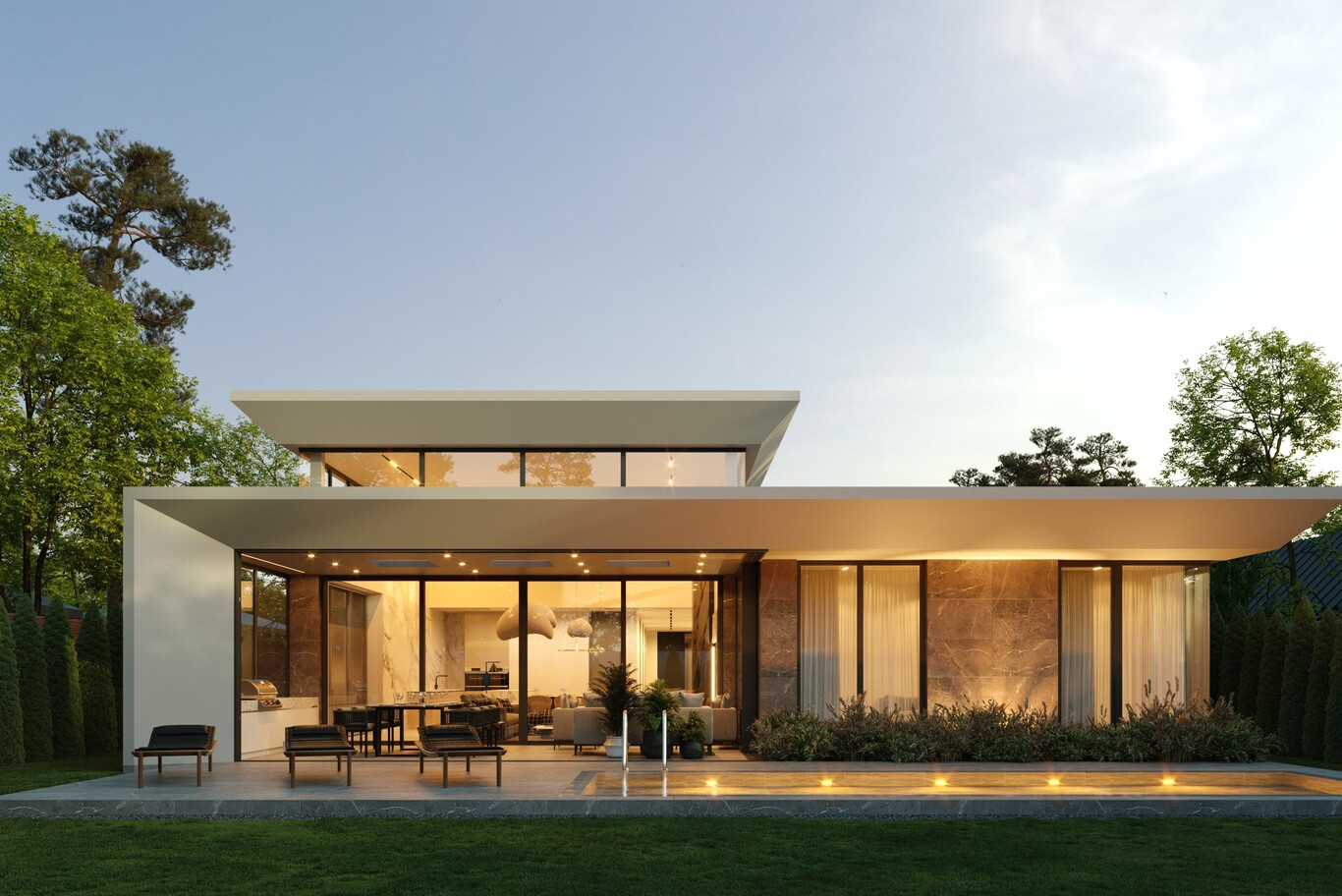
Organic villa design in Al Raha works best when the exterior strategy is established before floor plans are finalised and structural grids are locked. The facade, the landscape, the courtyard sequence, and the transition from public to private space all need to be resolved together—because the whole point of organic architecture is that these elements function as a single system.
If you’re planning a villa project in Al Raha Beach or Al Raha Gardens, you can explore our project portfolio for examples of residential work across Abu Dhabi, or get in touch directly to discuss your project brief and site conditions.
Frequently Asked Questions
What is organic architecture, and how does it apply to villa design in Abu Dhabi?
Organic architecture is a design approach that seeks harmony between a building and its natural surroundings. In Abu Dhabi villa projects, this means designing facades and outdoor spaces that respond to the Gulf’s coastal humidity, extreme solar exposure, and sandy terrain. Materials, forms, and landscaping are chosen to complement the site rather than work against it. The result is a villa that performs better thermally, requires less maintenance over its lifecycle, and meets Estidama sustainability requirements more naturally.
What facade materials are best for organic villas in Al Raha?
Dense limestone with low water absorption (below 3% by weight) is the most reliable natural cladding for Al Raha’s coastal environment. It resists salt corrosion, provides thermal mass that reduces cooling loads, and weathers gracefully. For shading screens, Accoya or thermally modified ash timber performs well, though aluminium composite louvres with timber-grain finishes are a lower-maintenance alternative. Polymer-modified lime render is preferred over cement render for sculptural or textured facade surfaces because it tolerates the thermal expansion and contraction cycles without cracking.
What is the Estidama Pearl Rating, and does it apply to villas in Al Raha?
Estidama is Abu Dhabi’s mandatory sustainability programme. All new buildings must achieve at least a 1 Pearl rating, and government-funded residential projects require 2 Pearl. The Pearl Rating System evaluates energy efficiency, water conservation, material sustainability, and indoor environmental quality. For villa exteriors, the most impactful credits relate to landscape water efficiency (Precious Water), facade thermal performance (Resourceful Energy), and natural ventilation and daylighting (Liveable Buildings).
Do I need Aldar’s approval in addition to ADM approval for a villa in Al Raha?
Yes. Al Raha Beach and Al Raha Gardens are developed by Aldar Properties, which maintains design guidelines covering facade colours, material finishes, boundary wall heights, and landscape setbacks. Your design must pass Aldar’s design review committee before it is submitted to the Abu Dhabi Department of Municipalities and Transport (ADM) for building permit approval. Working with a consultant experienced in both processes prevents the delays that come from conflicting comments between the developer and the authority.
Which plants work best for organic villa landscaping in Al Raha?
Salt-tolerant, low-irrigation species perform best. Ghaf (Prosopis cineraria) is the UAE’s national tree and provides effective canopy shade. Date Palms (Phoenix dactylifera) and Sidr (Ziziphus spicata) add vertical structure. For groundcover, Sesuvium portulacastrum tolerates salt spray and stabilises sandy soil. For green walls, Bougainvillea, Jasmine, and Tecoma stans are hardy enough for Abu Dhabi’s conditions when paired with a drip-fed irrigation system designed into the MEP scope.
How much does organic villa exterior design cost compared to conventional design?
Organic exteriors typically add 8–15% to facade costs compared to standard painted render with aluminium windows. The premium comes from natural stone cladding, timber screen systems, and landscape integration that requires MEP coordination. However, organic design strategies often reduce long-term operational costs through lower cooling loads, reduced maintenance frequency, and fewer material replacement cycles. The net cost over a 15–20 year period can be comparable to or lower than a conventional approach.


