
The UAE’s construction pipeline has not slowed. Dubai issued over 33,000 building permits in 2024, Abu Dhabi continues to expand Saadiyat Island and Yas Island with institutional and residential megaprojects, and the Northern Emirates are absorbing overflow demand for mid-market housing. What has changed is the kind of architecture being commissioned. Clients, developers, and government entities are moving away from glass-curtain-wall defaults toward buildings that perform better environmentally, communicate cultural identity more clearly, and integrate digital design tools from concept stage onward.
At Merka, our architectural design services span residential towers, hospitality projects, commercial headquarters, and institutional campuses across Dubai, Abu Dhabi, Riyadh, and Istanbul. The six trends below reflect what we’re seeing in active project briefs, authority feedback, and developer expectations this year.
Parametric Facades and Structural Expression
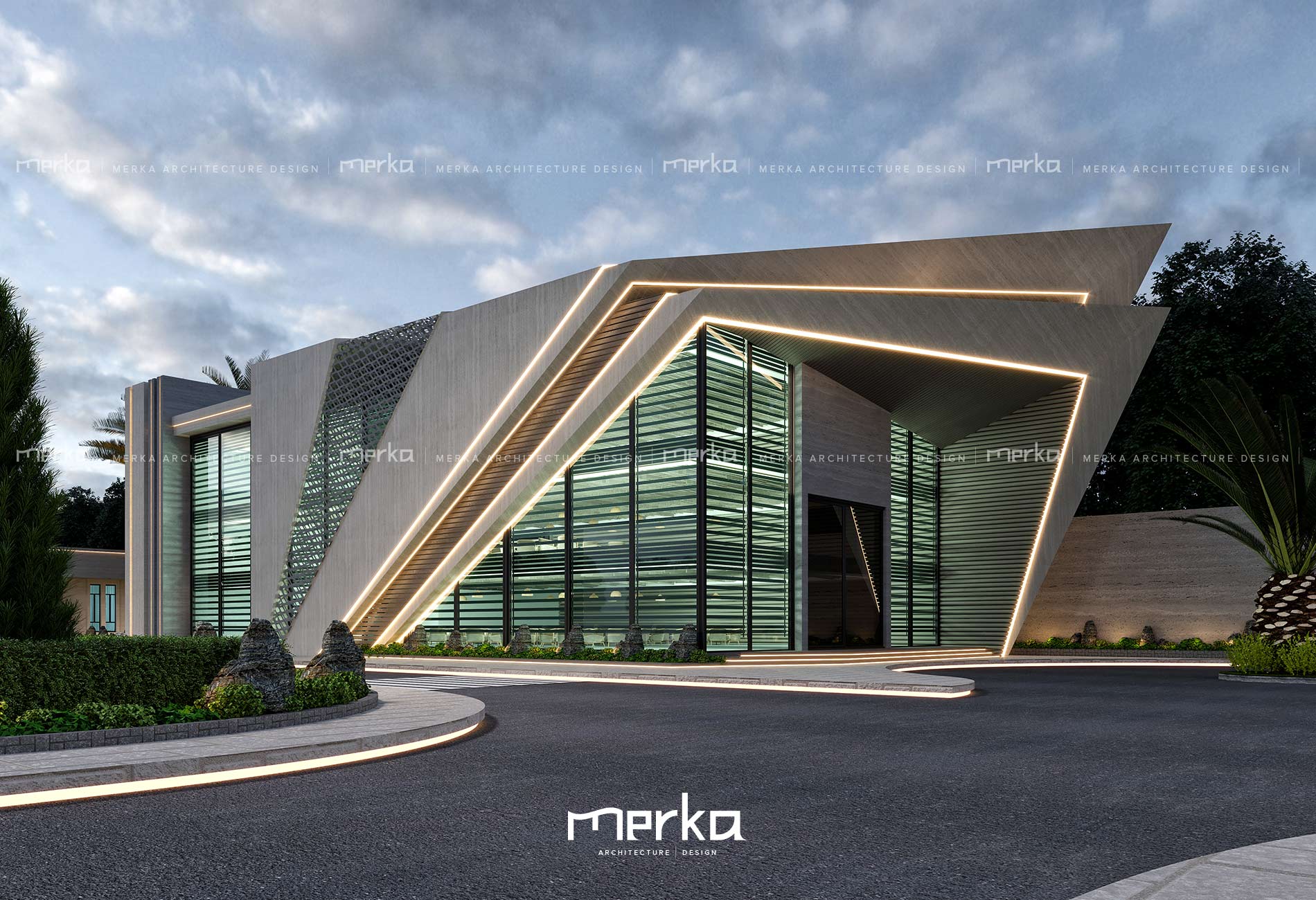
Computational design tools have made geometrically complex facades commercially viable. Where parametric geometry was once reserved for cultural landmarks and competition entries, it now appears in hotel towers, office headquarters, and high-end residential buildings across the Gulf. The shift is driven partly by fabrication technology—CNC-cut aluminium panels and unitised curtain wall systems can now deliver non-repetitive patterns at a cost premium of 15–25% over standard grid facades, rather than the 40–60% premium of a decade ago.
Merka’s Lattice Tower Hotel in Business Bay is a current example. The 65,000–75,000 sqm tower uses a geometric exoskeleton that wraps the full building envelope, serving simultaneously as structural bracing, solar shading, and the primary visual identity of the building. The lattice pattern is calibrated to reduce solar gain on the south and west exposures while maintaining transparency on the north elevation—a performance-driven approach to what reads as futuristic parametric design. Similar logic applies to the Triad Business Towers, where a tessellated glass skin captures light differently throughout the day, giving three separate tower volumes a unified material language across 180,000–220,000 sqm of commercial space.
Biophilic Design Beyond Planting
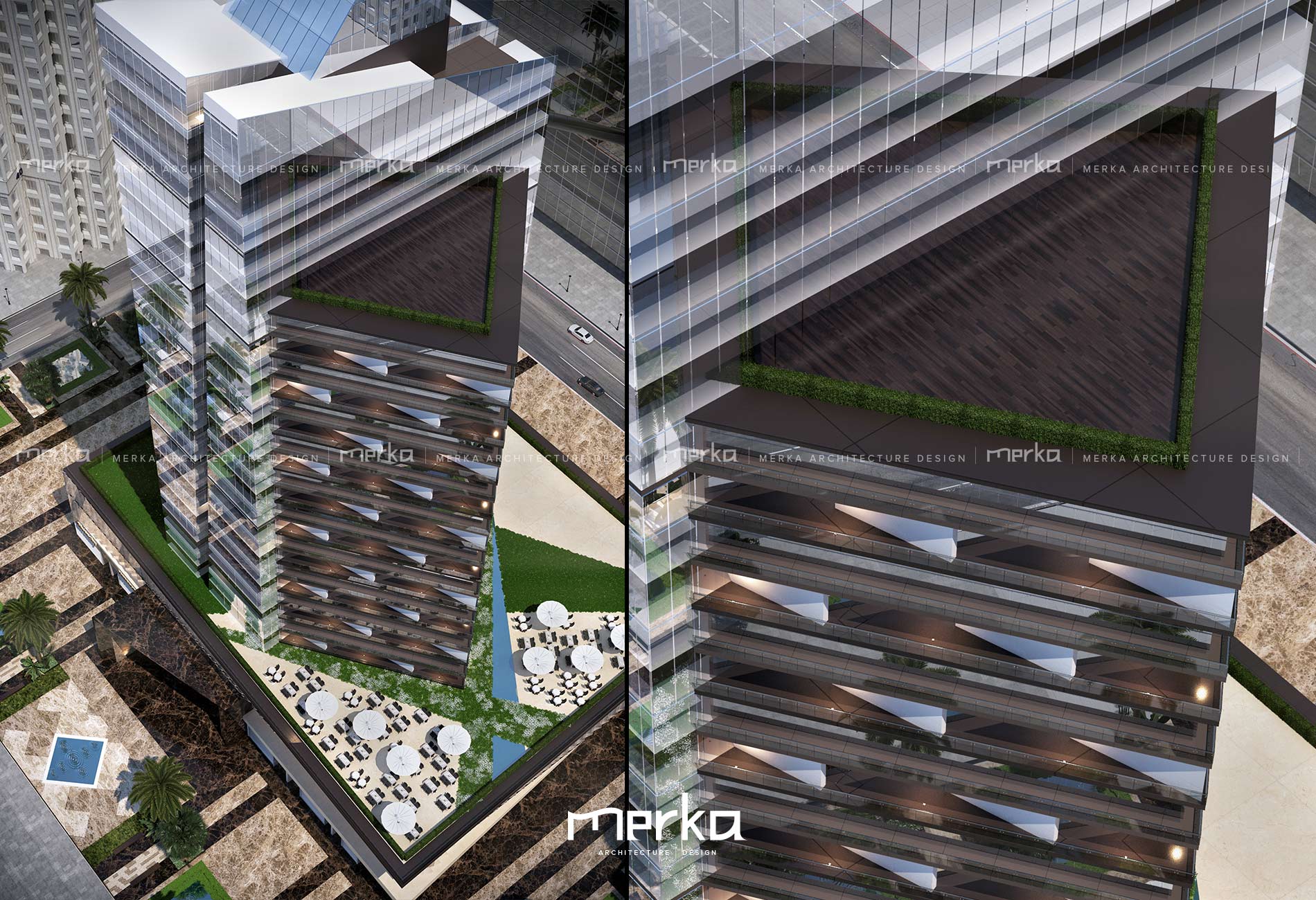
Biophilic design in the UAE has matured past the stage of adding rooftop gardens as a marketing feature. In 2026, it influences building form itself—curved floor plates that follow natural geometries, terraced setbacks that create habitable outdoor zones at every level, and facade systems that blur the threshold between interior and exterior space. The driver is partly regulatory (Estidama and Al Sa’fat both reward daylighting and natural ventilation strategies) and partly market-driven: post-pandemic buyers and tenants prioritise access to light, air, and greenery.
The Creekside Curved Residences at Dubai Creek Harbour (75,000–85,000 sqm) apply this at mid-rise scale. The curved facade geometry maximises panoramic terrace exposure for every unit, and the building’s rounded profile reduces wind load—a practical benefit in a waterfront location. The Dubai Hills Residential Terraces use a different strategy: angular balconies stacked in an offset pattern create self-shading and planting zones on every floor. Both projects apply passive design strategies that reduce mechanical cooling demand while giving residents direct contact with sky, breeze, and vegetation.
Emirati Heritage in Contemporary Form
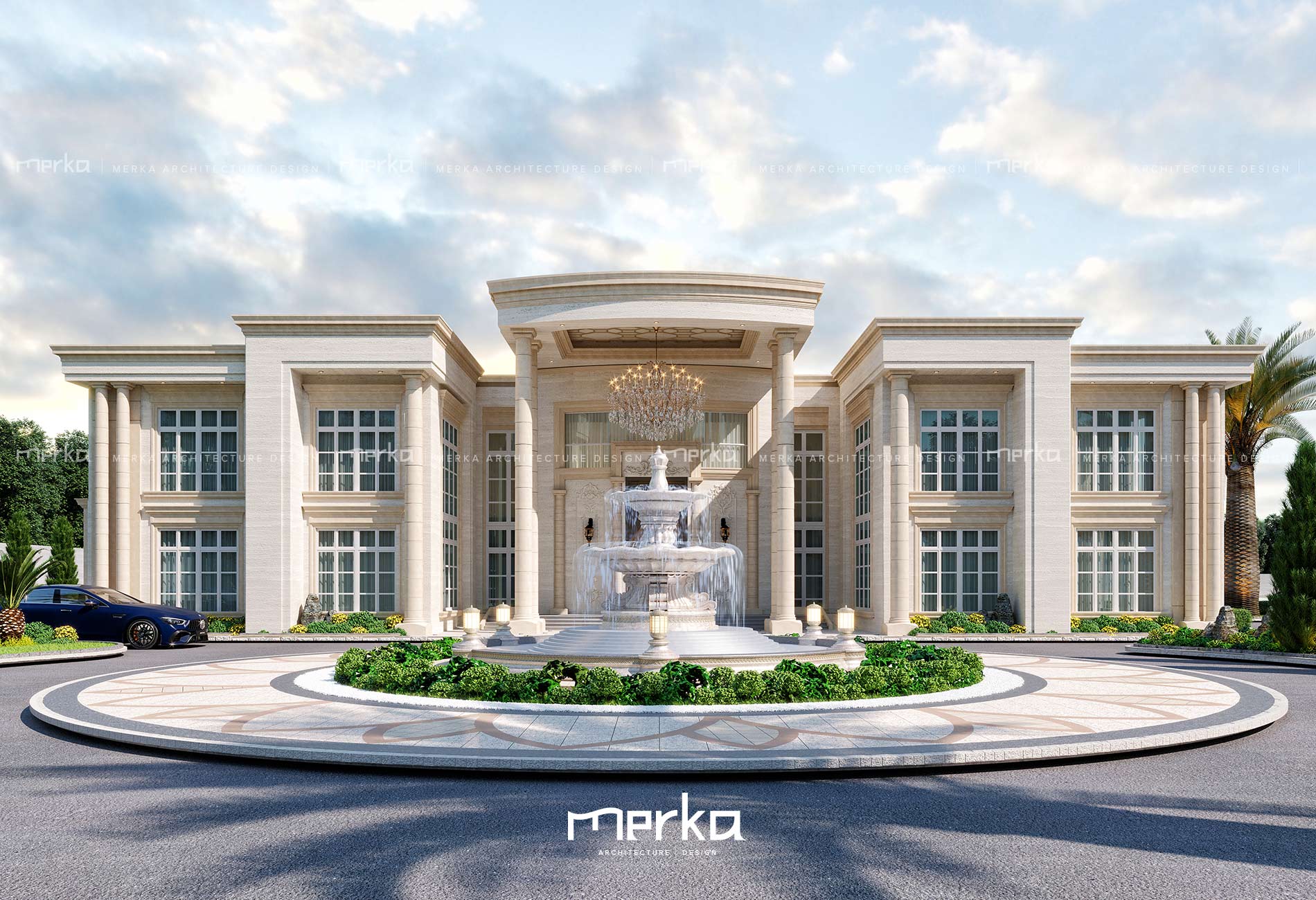
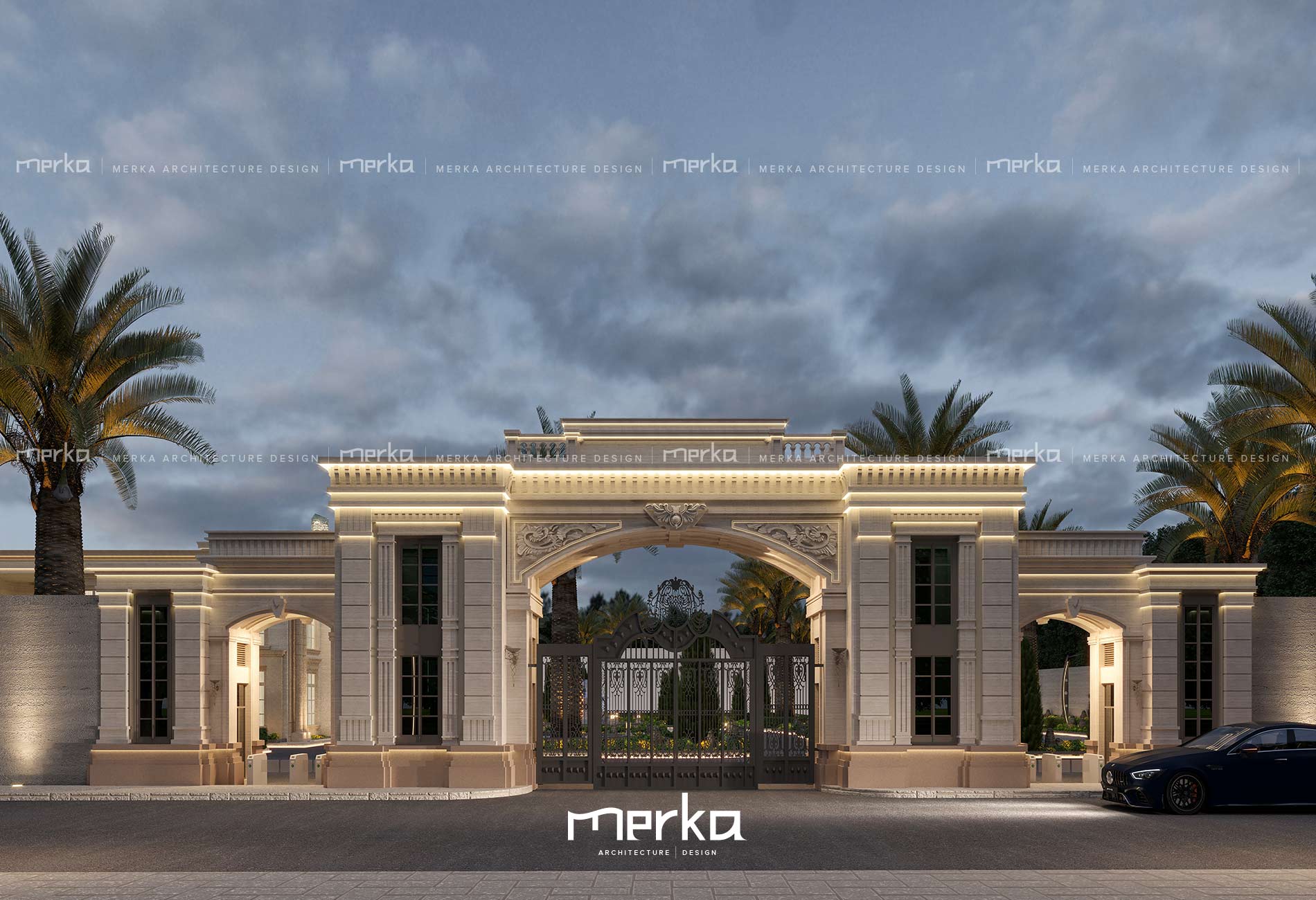
Government and institutional clients in Abu Dhabi are commissioning architecture that carries recognisable cultural signals without resorting to decorative pastiche. Merka’s Government Administration Complex (14,000–18,000 sqm) brings together a ministry headquarters, a formal reception villa, a modern majlis, a dedicated mosque, and secured support buildings on a single campus. The architecture uses stone, glass, and precision lighting to project institutional authority while maintaining proportional relationships and spatial sequences rooted in Emirati civic tradition—the progression from public forecourt to shaded colonnade to inner courtyard.
This reflects a broader trend across the Gulf: designers are asked to reinterpret rather than replicate heritage elements. Mashrabiya screens become parametric shading devices. Wind tower proportions inform ventilation stacks in mixed-use podiums. The courtyard typology reappears as an organising principle for campus plans. Merka’s approach to Modern Emirati Fusion works within this framework—extracting spatial logic from tradition rather than surface decoration.
Mixed-Use Vertical Communities
Single-programme towers—all office, all residential, all hotel—are giving way to vertically stacked mixed-use buildings that combine living, working, retail, and leisure within one structure. Dubai’s Downtown Mixed-Use Tower (28,000–36,000 sqm) illustrates this clearly: street-level retail, commercial floors in the lower podium, and residential units above, all wrapped in illuminated glass panels with recessed balcony frames. The Urban Split Tower in Dubai takes it further at 45,000–58,000 sqm, splitting the building into two distinct volumes connected by horizontal terrace bands that function as shared amenity zones.
The appeal for developers is financial resilience—diversified revenue streams reduce exposure to any single market segment. The challenge for architects is managing the technical interfaces between programmes: separate MEP risers, independent vertical circulation, acoustically isolated floor plates, and fire compartmentation strategies that satisfy Civil Defence requirements for each use category. These are coordination problems that start at schematic design, not problems that can be solved in shop drawings.
Sustainability as a Regulatory Baseline
Sustainability in the UAE has moved from aspiration to regulation. Abu Dhabi’s Estidama programme requires a minimum 1 Pearl rating for all new buildings. Dubai’s Al Sa’fat system grades buildings from Bronze to Platinum. Both systems assess envelope thermal performance, energy consumption, water efficiency, material sourcing, and indoor environmental quality. For architects, this means sustainability targets are non-negotiable design inputs that shape facade U-values, glazing ratios, and shading coefficients from the earliest sketch.
The practical impact on building design is significant. West-facing glazing ratios above 40% are increasingly difficult to justify through energy modelling. Fixed and operable shading devices—once treated as decorative additions—are now structural requirements that must be coordinated with facade design regulations and fire rating standards. High-performance insulated wall build-ups (U-values below 0.3 W/m²K) are becoming standard in Abu Dhabi. These mandates align closely with the principles of sustainable passive design, where the building envelope does the heavy lifting for thermal comfort before mechanical systems are sized.
Digital Fabrication and 3D Printing
Dubai’s 3D Printing Strategy targets 25% of new buildings to incorporate 3D-printed components by 2030. The city already holds the record for the world’s largest 3D-printed structure (the 640 sqm Dubai Municipality building, completed using Apis Cor technology with just three workers and a mobile printer). In 2024, the first fully residential 3D-printed villa was completed in Dubai, featuring curved walls nearly four metres high that would be impractical with conventional formwork.
For architectural practices, this opens up new possibilities for organic and non-repetitive facade geometries that were previously cost-prohibitive. The intersection of 3D printing, CNC fabrication, and BIM integration means that design data can flow directly from modelling software to fabrication equipment, reducing the interpretation gaps that traditionally introduce errors between design intent and built outcome. This has direct implications for facade panels, structural nodes, MEP fittings, and interior joinery—components where geometric precision matters and where manual fabrication introduces tolerance issues.
What This Means for Your Project
Each of these trends reshapes the decisions that developers, owners, and project teams need to make at the start of a project—not at the end. Facade strategy, sustainability compliance, programme stacking, and fabrication methods all interact, and resolving them early avoids costly redesign later. You can explore how these trends appear in practice across our project portfolio, or get in touch to discuss how they apply to your specific site and brief.
Frequently Asked Questions
What are the biggest architectural trends in the UAE in 2026?
The six most significant trends are parametric facade systems driven by computational design, biophilic architecture that shapes building form rather than just adding greenery, cultural hybridity that reinterprets Emirati heritage in contemporary structures, mixed-use vertical communities that stack multiple programmes in one tower, sustainability as a mandatory regulatory input (Estidama, Al Sa’fat), and digital fabrication including 3D printing for construction components.
How does parametric design affect building costs in Dubai?
Parametric facades currently add a 15–25% cost premium over standard curtain wall systems, down from 40–60% a decade ago. The cost reduction is driven by CNC fabrication technology and unitised curtain wall systems that can handle non-repetitive panel geometries. For high-profile projects like hotel towers and corporate headquarters, the premium is often justified by the marketing value and the integrated shading performance the facade provides.
Is sustainable design mandatory for new buildings in the UAE?
Yes. Abu Dhabi requires all new buildings to achieve a minimum 1 Pearl Estidama rating, with government-funded buildings needing 2 Pearl. Dubai’s Al Sa’fat system grades buildings from Bronze to Platinum and is mandatory for all new construction within Dubai Municipality jurisdiction. Both systems assess envelope performance, energy efficiency, water conservation, material sustainability, and indoor environmental quality.
What is Dubai’s 3D Printing Strategy for construction?
Dubai aims for 25% of new buildings to incorporate 3D-printed components by 2030. The city has already produced the world’s largest 3D-printed structure (a 640 sqm Dubai Municipality building) and the first fully residential 3D-printed villa. The technology reduces construction waste by up to 60%, cuts labour requirements significantly, and enables curved and organic geometries that are impractical with conventional formwork.
How is Emirati heritage being incorporated into modern UAE architecture?
Contemporary UAE architecture increasingly reinterprets traditional elements rather than replicating them. Mashrabiya screens become parametric shading devices with calibrated perforation patterns. Wind tower proportions inform ventilation design in mixed-use buildings. The courtyard typology reappears as an organising principle for campus masterplans. The approach extracts spatial logic and environmental performance from heritage forms, applying them through modern materials and construction methods.
Why are mixed-use towers becoming more common in Dubai?
Mixed-use towers provide developers with diversified revenue streams across residential, commercial, retail, and hospitality segments, reducing exposure to any single market downturn. For urban planning, they reduce commuter traffic by placing living, working, and leisure spaces within the same structure. The technical challenge lies in managing the interfaces between different programmes—separate MEP systems, independent circulation, acoustic separation, and fire compartmentation—which require coordinated design from schematic stage.
